- 17 years in and 2,200+ sessions, but CJ's practice nearly collapsed early on, down to her last 100 dollars with seven kids in college.
- After 25 years managing people, going independent still meant CJ starting over from scratch.
- The turning point was personal: CJ was teaching organizational health while running her own life into the ground.
- She rebuilt around family, cutting travel down to just Minnesota and Arizona.
- CJ turned the tools on her own business, an Accountability Chart™, a trusted core team, clear priorities.
- Her advice to the next generation: go pen to paper, convert back to the tools, and do the activities, there's no magic wand.
When people look at my practice today, running into my 17th year with more than 2,200 sessions under my belt, they see the numbers and the longevity.
They see the multi-city footprint and the long-term client relationships. But what they don't see is how close it all came to collapsing before it even really started. Mastery isn't something you inherit; it is something you survive. I wanted to share this story because the path to building something meaningful is rarely smooth, and it always demands more of you than you expect.
Long before I ever heard of the entrepreneurial operating system®, managing people was my default setting. When I was just 20 years old, I was working as a restaurant manager for Radisson, leading a staff of 40 waitresses.
That kicked off a 25-year career in the people business, eventually managing five corporate placement divisions in downtown Minneapolis and handling high-stakes corporate sales for enterprise accounts like Target, Best Buy, and Cargill. I was entirely comfortable in big rooms with big expectations.
Reading people and building teams had never been the hard part for me. Building an independent practice, however, was harder than any of that.
The hardest first year
In that first year, I was stuck in neutral because I was dabbling. I was half-committed, keeping one foot in my old corporate world while trying to wrap my head around a completely new one from scratch.
Learning someone else's content and shifting my focus from Fortune 500 procurement teams to individual, gritty business owners required starting over in ways I never anticipated at that stage of my career. I was wandering until Don Tinney gave me the literal kick in the ass I needed, pushing me to stop hesitating and get all in.
But drawing a line in the sand didn't make the road any smoother.
Within twelve months of launching, the floor dropped out from under me. I checked my bank account to find I was down to my last 100 dollars, all while trying to support seven children who were still in college. When the ground shifts that violently, fear is the first thing that takes over. I operated from a place of pure, fear-based survival for a long time after that. In those moments, you either find your grit or you don’t make it. My instinct has always been to fight, so I fought.
One hundred dollars and a Delta commute
To get the practice off the ground and keep things moving, I went wherever the work was.
My world became a blur of the East Coast, the West Coast, the Central Zone, and Arizona. I used to joke that Delta Air Lines was my daily commute, but the reality behind the joke was brutal.
There was a long stretch where I would rent a hotel room for just two hours between flights, not to sleep, but simply to lie down and try to stop feeling sick enough to stand on a stage or walk into a session room.
I was flying across the country teaching organizational health to leadership teams while completely running my own life into the ground. It was a massive blind spot, the exact same trap that Tzvi Schwartz and I have compared notes on since. It took an outside perspective to force me to stop and ask a fundamental question: what did I actually want my life to look like, not just my business? You have to make sure your own oxygen mask is on first.
You have to be healthy yourself, mentally, physically, and spiritually, before you can genuinely teach health to anyone else.
Turning the tools on myself
With that realization, I began to deliberately graduate the clients who were furthest away, one by one.
Today, I don't do planes, trains, and automobiles anymore. My practice runs strictly out of Minnesota and Arizona, the only two places where my family lives. I found my personal balance, and today I share that local footprint with two partners across three session rooms.
Building that practice required the exact same structural discipline I preach to my clients.
Within the first two years, I looked in the mirror and built an accountability chart for my own business. I started by hiring Jill, and we spent years defining exactly what that support needed to look like. Later, when I considered adding a session room assistant, the choice wasn't based on a gut feeling; it came down to simple math. I calculated the cost of the role against the 250 hours a year it would save me, and the data made it a no-brainer.
Today, that team is the backbone of everything I do: Jill has been my integrator for 15 years, acting as my bridge to my CPA firm, my professional obligations, and my personal life. She manages the chaos, and frankly, she’s much nicer than I am. Kylie handles our session room operations across our offices, owning everything from room readiness to the client lunches and the overall experience. And Sam, my marketing person who manages my LinkedIn and connections, happens to be my daughter, who also supports two other implementers alongside me.
I lead this team the same way I coach executives to lead theirs.
I am not a micromanager. I set crystal clear expectations, establish firm priorities, and trust my people to own their seats without me hovering over them. We run on a strict 24-hour email rule to maintain momentum, and our priorities are absolute: existing clients are always number one, prospects and sales referrals are number two, and everything else follows.
I expect my team to own managing up as much as I manage down. If they need me, I will be there in two seconds, but they have to manage themselves first.
Unfiltered truths for the next generation
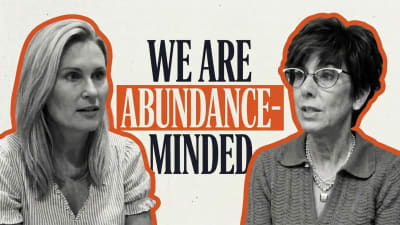
When I look at the newer generation of implementers, I see an incredibly vibrant, abundance-minded community that genuinely supports one another. But achieving true mastery means facing some unfiltered truths, and if you put a hot mic in front of me, there are a few things we need to talk about doing better.
First, we have to ditch the technology in the session room.
Gino Wickman taught us a specific discipline for a reason: pen to paper. I do not allow AI note-takers, I do not allow recording, and I do not use powerpoints. To be completely present and engaged with the leadership team in front of you, you have to get out of your head and into your heart. Spend the hours whiteboarding, writing, and building the muscle memory so you never look like a robot reading from a manual.
Second, we have to stop relying on duct tape. When a client calls you mid-quarter in a total meltdown because their business has doubled and the visionary is stuck wearing four different seats, don't just sit on the phone and let them vent all day.
Convert back to the tools. Push them to run a delegate and elevate exercise and give them a tangible, actionable next step. If you don't, you are just layering duct tape over a structural problem until it is two inches thick and impossible to cut.
Finally, you have to accept that there is no magic wand. No one is going to hand you a shortcut or fill your pipeline for you. If your practice is struggling, look at your raw data and your scorecard. The four, two, one system works. If you don't like public speaking, do networking or one-on-ones, but do the activities.
I didn't reach 2,200 sessions by waiting for perfect conditions or hoping for an easy path. I got here by moving, adjusting, and completely rebuilding my own practice more than once when it stopped working for my life. The journey to mastery never actually ends.
People has always been my thing, but building this practice taught me the ultimate lesson: that includes having the discipline to manage myself.